

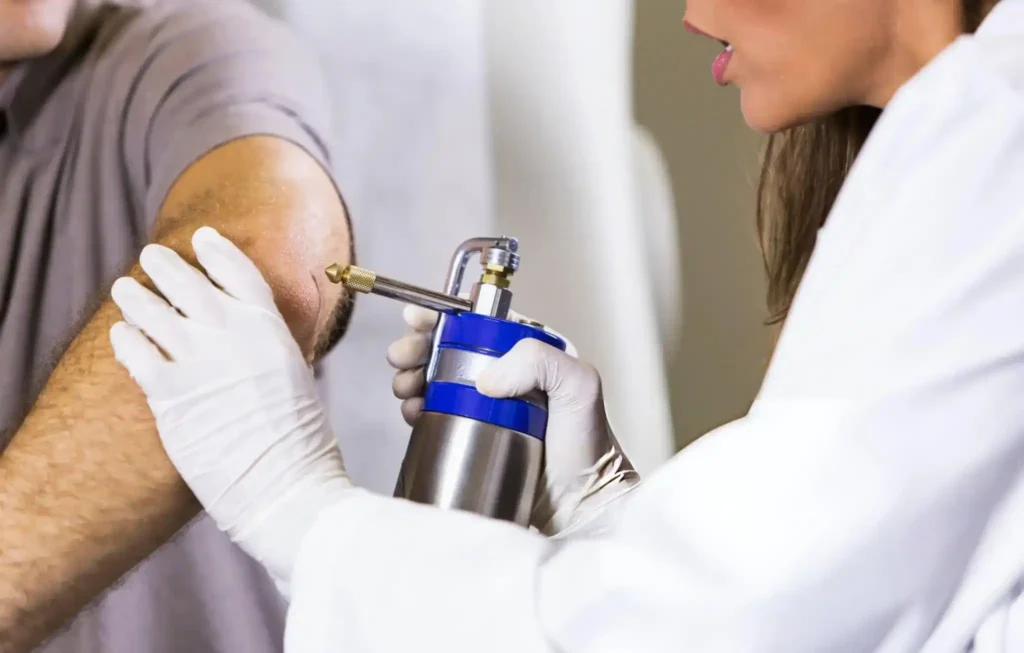
What Is Cryotherapy for Skin Lesions? Procedure, Uses and Aftercare
Cryotherapy is a procedure that uses intense cold, usually liquid nitrogen, to freeze selected skin lesions. It may be considered for conditions such as warts and actinic keratoses, but the lesion should first be assessed to confirm that freezing is the most appropriate approach.
This guide explains how cryotherapy works, which lesions it may be used for, what to expect during and after treatment, and when to contact your GP.
Key Takeaways
- Cryotherapy usually uses liquid nitrogen to freeze selected skin lesions.
- Warts and actinic keratoses are among the most common uses in general practice.
- Undiagnosed or suspicious lesions should be assessed before any treatment
- Stinging, redness, swelling, blistering and scabbing may occur afterwards
- Increasing pain, spreading redness, pus or delayed healing should be reviewed by a GP
What Is Cryotherapy and How Does It Work?
Cryotherapy uses liquid nitrogen to rapidly freeze targeted skin tissue. The freezing and thawing process damages the treated cells, and the body gradually clears the affected area during healing.
The method of application, treatment time and number of freeze-thaw cycles all vary depending on the lesion’s type, size, depth and location. RACGP guidance notes that the technique should be matched to the individual lesion rather than applied the same way for every patient. If you are unsure whether a spot needs assessment, our skin cancer checks page explains what a consultation involves.
Which Skin Lesions May Be Treated With Cryotherapy?
Cryotherapy may be considered for a range of superficial skin lesions after assessment. Common uses in general practice include:
- Common or plantar warts
- Actinic keratoses, also known as solar keratoses
- Selected seborrhoeic keratoses
- Molluscum contagiosum
- Selected skin tags
- Some other diagnosed superficial lesions
Warts and actinic keratoses are the most established uses. Other lesions may be suitable depending on their diagnosis, size, location and individual clinical factors. This article should not be used to self-diagnose any skin change.
Why Must a Skin Lesion Be Checked Before Freezing?
Assessment should always come before cryotherapy. A GP needs to determine whether the lesion is suitable for freezing or whether another approach may be more appropriate.
Some lesions may need:
- Monitoring over time rather than immediate treatment
- A biopsy to examine the tissue in a laboratory
- Excision to remove the lesion with clear margins
- Referral to a dermatologist or specialist service
Cryotherapy destroys the treated tissue, which means it is not suitable when a tissue sample is needed for diagnosis or when confirming complete removal is clinically important. RACGP guidance advises against treating an undiagnosed lesion and recommends biopsy or referral when the diagnosis is uncertain.
If you have a persistent, changing or unidentified skin lesion, a GP can assess it through a skin lesion assessment and discuss whether cryotherapy, biopsy, monitoring or referral may be appropriate.
What Happens During a Cryotherapy Procedure?
Understanding the steps involved can reduce anxiety before treatment.
- The GP assesses the lesion and discusses whether cryotherapy is suitable
- The procedure, possible reactions and alternatives are explained
- Liquid nitrogen is applied by spray or applicator
- The lesion is frozen for a period suited to its type, size and location.
- The area thaws naturally, and another freeze-thaw cycle may follow if needed
- Aftercare and follow-up instructions are provided before you leave
Patients may feel burning, stinging or aching during freezing and for a short time afterwards. The intensity of discomfort varies with the lesion type, body area and depth of treatment. Cancer Council NSW notes that people often experience a burning or stinging sensation during the procedure.
What Should You Expect After Cryotherapy?
Healing can vary considerably depending on the lesion, treatment depth and body area. Lower leg sites tend to heal more slowly than facial areas.
| Commonly expected | Contact the clinic if you notice |
| Temporary stinging or soreness | Increasing or severe pain |
| Redness and mild swelling | Spreading redness or swelling |
| Clear or blood-filled blister | Pus or thick yellow fluid |
| Scab or crust formation | Persistent bleeding |
| Temporary tenderness | An area not healing as expected |
| Lighter or darker healed skin | A lesion that persists, grows or returns |
A blister may develop within hours of treatment. This is a recognised part of healing, but it does not on its own confirm that treatment has been successful.
How Should You Care for Skin After Cryotherapy?
Following the treating clinician’s specific instructions is always the priority. General aftercare steps may include:
- Keep the area clean and wash it gently with soap and water
- Pat the area dry rather than rubbing
- Use a dressing if clothing may rub against the treated site or the area is likely to be knocked.
- Avoid picking at any blister or scab
- Ask your GP before applying creams, antiseptics or other products
- Keep the healing area out of direct sun where practical. Ask your clinician when sunscreen can be applied after the skin has repaired.
For general aftercare information, patients can review DermNet’s cryotherapy guidance while waiting for their appointment or following treatment. For general aftercare information, patients can review DermNet’s cryotherapy guidance.
Can Cryotherapy Cause Scarring or Skin-Colour Changes?
Yes, it can. Lighter or darker pigmentation at the treated site may occur and can be temporary or permanent. Scarring, hair loss in hair-bearing areas and temporary nerve effects are also possible.
Risk varies with the lesion location, treatment depth and individual skin characteristics. People with more deeply pigmented skin may be more likely to notice lasting colour changes. Discussing these possibilities with your GP before treatment is sensible, particularly for visible facial areas. Discuss these risks before treatment, particularly if the lesion is on a visible area or you are concerned about lasting skin-colour changes.
When Should You Contact Your GP After Cryotherapy?
Contact the clinic or your GP if you notice:
- Worsening or severe pain at the treated site
- Spreading redness or swelling beyond the treated area
- Pus or thick yellow discharge from a blister
- Persistent bleeding
- Fever or feeling generally unwell
- An area that is not healing within a reasonable time
- A lesion that remains, grows or returns after healing
These signs may indicate infection or that the lesion needs further assessment or a different treatment approach. Contact the practice promptly if pain, redness, swelling or discharge is worsening, rather than waiting for a routine follow-up.
Cryotherapy and Skin-Lesion Assessment in Cameron Park
Cameron Park Healthcare’s independent GPs assess skin lesions and may provide cryotherapy, biopsy, follow-up, or a dermatology referral where clinically appropriate and within scope. Patients who need a skin lesion reviewed are encouraged to mention this when booking so an appropriate appointment can be arranged.
To arrange a skin-lesion assessment, book a GP appointment at Cameron Park Healthcare and mention the skin concern when scheduling. You can also check our current procedure fees before attending.
FAQs
Does cryotherapy for a skin lesion hurt?
It can cause burning, stinging or aching during and shortly after treatment. The intensity varies with the lesion, body area and depth of treatment.
Is a blister normal after cryotherapy?
A clear or blood-filled blister can occur within hours. Follow the clinician’s instructions and contact the clinic if pain, redness or discharge worsens.
How long does cryotherapy take to heal?
Healing varies by lesion, treatment depth and body area. Facial sites may heal more quickly, while lower leg areas can take considerably longer.
Will one treatment remove the lesion?
Not always. Warts and thicker or persistent lesions may need repeat treatment or a different management approach.
How much does cryotherapy cost?
Cost depends on the lesion, procedure, consultation type and Medicare eligibility. Review the clinic’s current fees, or ask when booking to confirm what applies to your situation.