
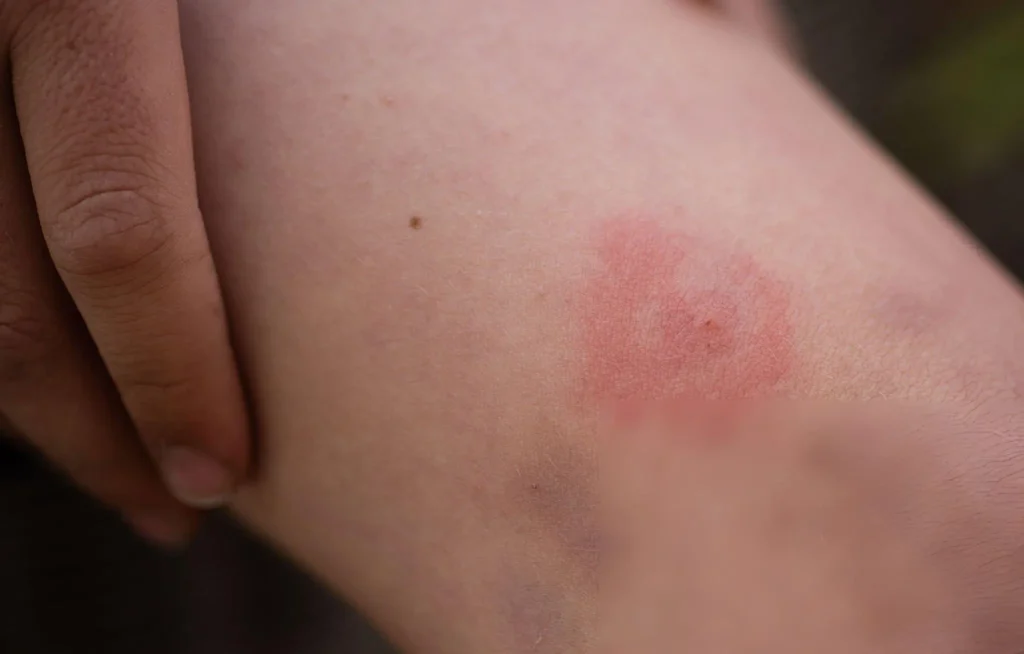
An insect bite can leave an itchy, red or swollen patch of skin. Most reactions settle with simple care, but some bites can become infected or trigger an allergic reaction. Knowing what to watch for helps you decide when to manage a bite at home and when to arrange a GP assessment.
This guide covers common symptoms, bite types, safe home care, signs of infection and when to seek medical help.
Key Takeaways
- Most mild insect bites cause temporary itching, redness or swelling.
- Mosquito, flea and bed bug bites can look similar.
- Pictures give clues but cannot confirm the cause.
- Worsening symptoms or possible infection may need GP assessment.
- Severe allergic reactions need emergency care.
What Are the Common Symptoms of Insect Bites?
Insect bites commonly cause itching, redness and swelling. The severity depends on the insect and your skin’s response. Symptoms may include:
- Itching or irritation
- Redness or skin colour change
- Raised bumps or welts
- Mild pain or tenderness
On darker skin, redness may be less obvious, so also look for warmth, tenderness and swelling.
What Are the Different Types of Insect Bites in Australia?
Different insects can cause similar marks, so this table offers clues rather than a diagnosis.
| Possible insect | Common reaction | Additional clue |
| Mosquito | Itchy, raised bump | Often on exposed skin |
| Bed bug | Itchy spots or welts | May follow sleep; check bedding |
| Flea | Very itchy small marks | Often on feet or lower legs |
| Ant | Pain, redness or swelling | Follows direct contact |
| Bee or wasp | Immediate pain and swelling | A sting, not a bite |
Bed Bug Bites – What Do They Look Like?
Bed bug bites can cause itchy marks on exposed skin, sometimes in groups. However, some people develop no visible reaction, and marks may appear days later. Blood spots, dark markings or evidence of insects around bedding can provide additional clues.
Flea Bites – Common Symptoms and Clues
Flea bites are small, very itchy marks, often around the ankles or lower legs. Pets can be a source, but ownership does not prove fleas.
Can Pictures Help With Identifying Insect Bites?
Pictures can help compare bite patterns, but different bites often look alike. Appearance alone may not identify the insect or show whether the skin is infected. These clues can be more useful:
- Where on the body the marks appeared
- Whether they are single or grouped
- Whether they followed sleep or outdoor activity
- Whether symptoms are improving or worsening
How Can You Treat a Mild Insect Bite at Home?
Simple care usually helps mild bites. Try these steps:
- Wash the area gently with soap and water
- Apply a cold pack wrapped in cloth
- Avoid scratching or breaking the skin
- Ask a pharmacist about suitable itch or pain relief
- Watch for improvement or worsening
Children often scratch itchy bites, which can irritate the skin. Keep their nails short and the area clean. For age-appropriate advice, ask a pharmacist or GP, including through Cameron Park Healthcare’s children’s health services. Ticks and spiders need different first aid.
How Can You Tell if an Insect Bite May Be Infected?
Possible warning signs include:
- Increasing pain or tenderness
- Spreading redness or inflammation
- Increasing warmth or swelling
- Pus or discharge
- Fever or feeling unwell
Allergic or inflammatory reactions can also cause redness and warmth, so these signs alone do not confirm infection or the need for antibiotics.
When Should You See a GP for an Insect Bite?
A GP assessment may be appropriate if a bite is worsening, looks infected or is not improving as expected. Consider seeking advice if:
- Pain or swelling is unusually significant
- The reaction lasts longer than expected
- A child’s symptoms concern you
- The cause is unclear, and symptoms persist
Most mosquito bites do not cause mosquito-borne illness. However, symptoms such as fever, headache, rash, fatigue or joint pain after mosquito exposure warrant prompt medical assessment.
If a bite is worsening, stays painful or appears infected, a GP can examine the area and discuss whether treatment or further care is appropriate.
When Is an Insect Bite or Sting an Emergency?
Call Triple Zero (000) immediately if signs of a severe allergic reaction appear after a bite or sting. These can include:
- Difficulty or noisy breathing
- Swelling of the tongue or throat
- Persistent dizziness or collapse
- Sudden wheezing or persistent coughing
- Difficulty speaking
- Abdominal pain or vomiting after a sting
If you suspect anaphylaxis, lay the person flat and do not allow them to stand or walk. Give an available adrenaline device immediately, following its instructions, then call Triple Zero (000). If breathing is difficult, the person may sit with their legs outstretched. Follow ASCIA first-aid guidance while waiting for an ambulance.
How Can You Reduce the Risk of Insect Bites?
Use appropriate insect repellent and protective clothing outdoors, fit window screens and remove standing water around the home.
Insect Bite Assessment in Cameron Park
People in Cameron Park and surrounding Hunter communities may encounter biting insects while gardening, walking or camping. Cameron Park Healthcare provides general medical consultations for adults and children, and treatment depends on the clinician’s assessment. Fees vary between independent doctors, so see our consultation fees page.
If you are concerned about a persistent or unusual bite reaction, contact Cameron Park Healthcare to arrange a GP appointment.
FAQs
How long do insect bites usually last?
Most uncomplicated bites improve over several days, though some last longer. Seek assessment if symptoms worsen or persist.
Do insect bites always need antibiotics?
No. Antibiotics are not routinely needed. A GP may consider them if a bacterial infection is suspected.
Why do I keep getting bites after sleeping?
New marks after sleeping may justify checking bedding for bed bugs, but timing and appearance cannot confirm the cause.
What if my child keeps scratching bites?
Keep the area clean, discourage scratching and ask a pharmacist or GP about age-appropriate relief if itching persists.